IRUS – Agentic AI
32nd IEEE International Conference on High Performance Computing, Data, & Analytics
IRUS Session #1: Agentic AI in Action: Architectures, Autonomy, and Enterprise Enablement
Date: December 19th, 2025, 3:30 PM – 5:30 PM
Location: The Westin Hyderabad Mindspace, Hyderabad, India
This session brings together thought leaders and practitioners to showcase how agentic AI and multi‑agent systems are reshaping the foundations of scalable, intelligent enterprises. From architecture‑driven approaches that move beyond single LLMs to coordinated teams of specialized agents, to practical demonstrations of sales enablement platforms powered by agentic RAG, the talks highlight how autonomous agents can plan, reason, act, and learn in real‑world contexts. Attendees will gain insights into agent topologies, governance frameworks like CASE, and applied use cases where policy, retrieval, validation, and optimization agents collaborate to deliver reliable, transparent, and domain‑aligned decision‑making. The session emphasizes responsible autonomy—embedding guardrails, oversight, and trust—while illustrating how agentic AI unlocks operational intelligence that translates analysis into measurable action across industries.
Key Highlights of the Session
- Agentic AI architectures: Moving beyond single LLMs to multi‑agent orchestration.
- CASE Framework: A four‑layer methodology for governing autonomous agents (Control, Adaptive, Supervisory, Engineering).
- Responsible autonomy: Embedding guardrails, tracing, and human oversight for safe deployment.
- Sales enablement agents: AI copilots for presentations, analytics, and seller‑buyer collaboration.
- Agentic RAG: AI that drives outcomes by combining retrieval with autonomous action.
Laks Raghupathi, Shell India
Industry Research User Session Chair
Chiranjib Sur, Shell and Krea University, India
IEEE HiPC, General Vice-chair
Session Moderator
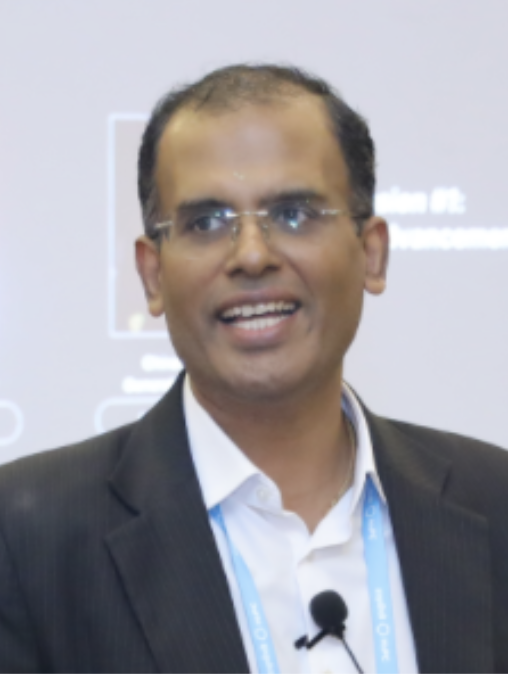
Laks Raghupathi, IRUS Chair & Session Moderator
Shell India
Laks Raghupath PhD, Global AI Transformation Leader at Shell India. With over 20 years of experience, he leads Shell’s Industrial AI Group, overseeing global teams of data scientists and engineers. He is also Chair of the IEEE Data Analytics Industry and a mentor for emerging talent, bringing deep expertise in enterprise‑scale digital and AI innovation across energy, supply chain, and B2B commerce.
Speakers
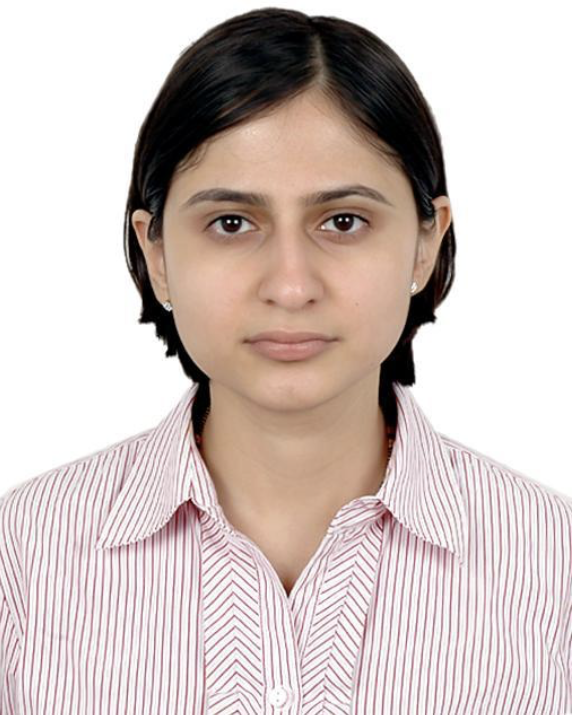
Roshni Ramnani
AI Researcher • Innovation Leader, Accenture
Bio:Roshni Ramnani is a researcher and developer with over 19 years of experience, including 14 years dedicated to AI, ML, NLP, and Conversational AI. Her work spans diverse domains including pharma, finance, and software engineering, where she has built intelligent systems that combine deep technical rigor with practical, real-world impact. She has filed 17 patents and co-authored 25 technical papers, contributing to advancements in enterprise AI, agentic automation, and applied machine intelligence. Roshni is deeply hands-on in the lab, involved in designing and prototyping cutting-edge AI architectures. She holds a master’s degree in AI/ML and continues to focus on applied research using language models, knowledge graphs, and agentic systems.
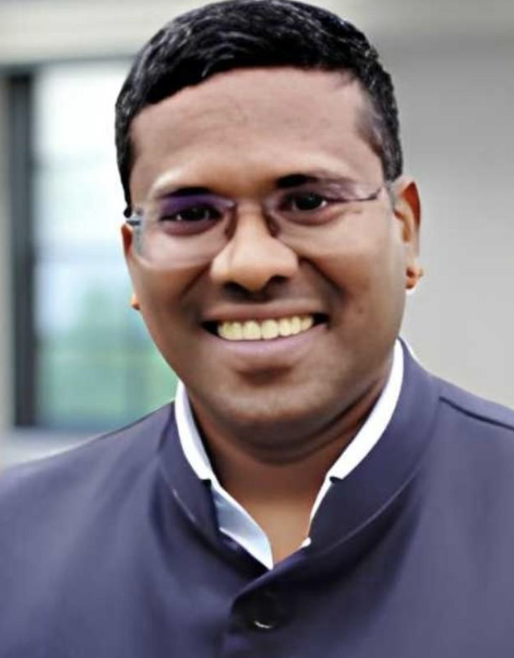
Dr. Srinivas Telukunta
Faculty Mentor, Johns Hopkins University & Great Learning
Bio: Dr. Srinivas Telukunta works at the intersection of artificial intelligence, large-scale systems engineering, and responsible autonomy. His work focuses on platform-level foundations for agentic AI—including multi-agent orchestration, durable execution, and safety frameworks—drawing on control theory, cybernetics, and complex adaptive systems to ensure predictable and verifiable agent behavior.
He is a graduate of IIT Madras and holds a PhD from Cornell University, an MBA from the Kellogg School of Management and the Indian School of Business, a CDAIO (Chief Digital and AI Officer) from ISB, and a Master’s degree in Artificial Intelligence and Machine Learning from BITS Pilani.
Dr. Telukunta is a Faculty Mentor for executive programs at Johns Hopkins University and a CPG industry AI leader, with experience spanning applied machine learning, multi-cloud systems, and AI safety. His work has supported cross-functional AI initiatives across supply chain, finance, employee experience, and R&D. He is the author of the CASE Safety Framework, a structured, multi-layer methodology for validating and governing autonomous AI systems.
His research interests include agentic architectures, AI safety, systems reliability, and computational frameworks for next-generation autonomous systems.
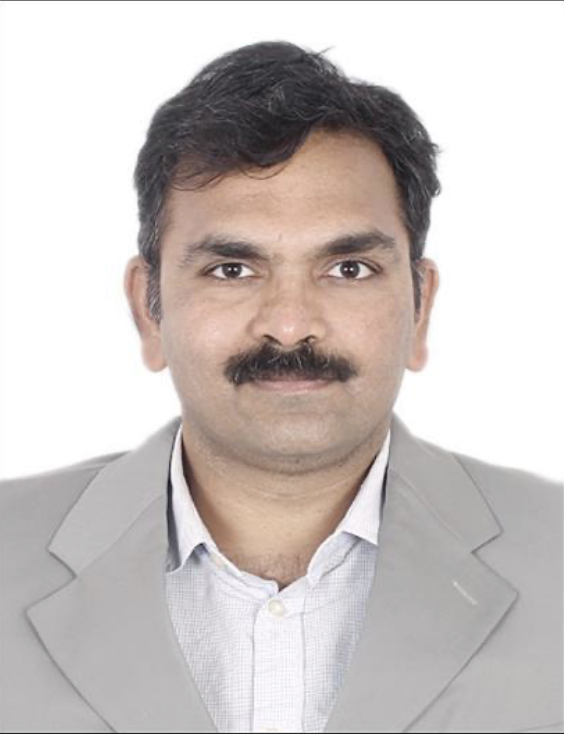
Vishnu Vardhan Makkapati
Senior Manager, Seismic Software India
Bio: Vishnu Vardhan Makkapati is a Senior Manager at Seismic Software India Private Limited where he leads the AI Centre of Excellence. He has a dual degree in B.E (Hons) Electrical & Electronics and M.Sc. (Hons) Mathematics from BITS, Pilani. He later graduated from IISc with a M.Sc. (Engg.) degree. He holds more than 35 patents, with many others pending. He has published several papers in reputed international conferences and journals.

HiPC 2025 is the 32st edition of the IEEE International Conference on High Performance Computing, Data, and Analytics. It will be an in-person event in Hyderabad, India, from December 17 to December 20, 2025.
IEEE Conduct and Safety Statement
IEEE believes that science, technology, and engineering are fundamental human activities, for which openness, international collaboration, and the free flow of talent and ideas are essential. Its meetings, conferences, and other events seek to enable engaging, thought provoking conversations that support IEEE’s core mission of advancing technology for humanity. Accordingly, IEEE is committed to providing a safe, productive, and welcoming environment to all participants, including staff and vendors, at IEEE-related events
IEEE has no tolerance for discrimination, harassment, or bullying in any form at IEEE-related events. All participants have the right to pursue shared interests without harassment or discrimination in an environment that supports diversity and inclusion.
Participants are expected to adhere to these principles and respect the rights of others. IEEE seeks to provide a secure environment at its events. Participants should report any behavior inconsistent with the principles outlined here, to on site staff, security or venue personnel, or to [email protected].
IEEE Computer Society Open Conference Statement
Expanding participation in computing is central to the goals of the IEEE Computer Society and all of its conferences. The IEEE Computer Society is firmly committed to broad participation in all sponsored activities, including but not limited to, technical communities, steering committees, conference organizations, standards committees, and ad hoc committees that welcome the entire global community.
IEEE’s mission to foster technological innovation and excellence to benefit humanity requires the talents and perspectives of people with many disciplinary backgrounds.
All individuals are entitled to participate in any IEEE Computer Society activity free of discrimination and harassment.
Follow us on: