Keynote Speakers
33rd IEEE International Conference on High Performance Computing
Keynote Talks
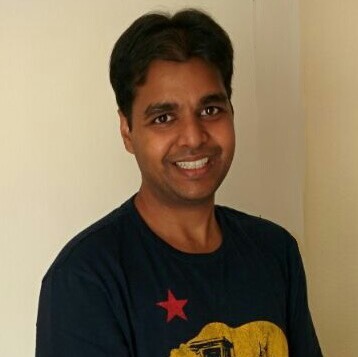
Title: Building AI in India, for India and the World: Challenges, Opportunities, and the Road Ahead
Speaker: Niket Agarwal, Senior Distinguished Engineer, NVIDIA.
Abstract: India is roughly 18% of the world's population and under 1% of the data that large language models are trained on -- an asymmetry usually framed as a data problem, but which is equally a systems one: Indic scripts cost four to thirteen times more tokens than English for the same content, so usable context collapses, KV-cache and prefill costs rise in proportion, and efficiency techniques validated on English (quantization, speculative decoding, distillation) degrade in ways that automatic metrics understate by close to an order of magnitude.
The opportunity is that the frontier has moved: capability now comes from post-training (reinforcement learning, verifiable environments, reward design), rather than from parameter count, and that frontier is reachable from India in a way trillion-parameter pretraining is not, provided we build RL compute in country, open environments that encode Indian tasks, and evaluation we can trust -- the binding constraint, since you cannot optimize against a reward you cannot measure.
These constraints are not parochial: severe cost sensitivity, latency budgets under real network conditions, code-mixed and romanised input, voice as the primary interface, and domestic control that mandates in-country inference are the conditions the world's next several billion users will impose, so building for them here produces systems research that travels and the decisions taken in the next twelve months will determine what India runs for the rest of the decade.
Speaker Bio: Niket Agarwal is a Senior Distinguished Engineer at NVIDIA, where he leads initiatives at the intersection of AI infrastructure, large-scale model development, and accelerated computing. He is driving NVIDIA's India ecosystem engineering strategy, working closely with startups, enterprises, academia, and government organizations to accelerate AI adoption and innovation across the region. Niket also leads NVIDIA's India-focused Nemotron research initiatives, driving collaborations on multilingual AI, Indic language models, data ecosystems, and sovereign AI efforts. His work spans large language models, agentic AI systems, inference and training optimization, and the deployment of AI infrastructure at scale.
Prior to NVIDIA, Niket spent nearly a decade at Google building large-scale distributed systems and infrastructure, followed by engineering leadership roles at Meta. He holds a PhD in Computer Engineering from Princeton University and a bachelor's degree from IIT Kharagpur, with specialization in systems and computer architecture.
Niket is particularly passionate about advancing AI for India and enabling the next generation of AI platforms, applications, and talent.
Title: How AI will drastically change the way science is done: Genesis Mission, Hypothesis generation, and Integration with HPC and quantum computing
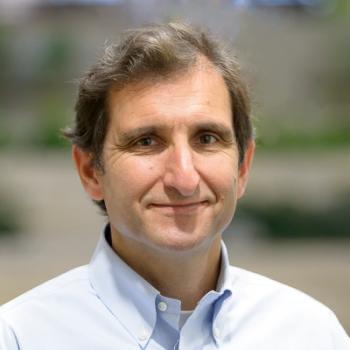
Speaker: Franck Cappello, Argonne National Laboratory.
Abstract: Advanced AI models have progressed drastically over the past five years to the point where AI agents are being integrated into research workflows. We observe an increasing use of AI in different scientific tasks, as agents, simulation surrogates, foundation models, and research planners and controllers. The US Genesis Mission is pursuing the goal of doubling the productivity and impact of American research and innovation within a decade by creating a national discovery platform that unites the world's most powerful supercomputers, AI systems, and emerging quantum technologies. Ultimately, AI models will be used for hypothesis generation and testing, not only automating manual research tasks but also accelerating ideation. After introducing the general trend in agentic AI for science, the Genesis Mission, and several of its components, this talk will explore how HPC, AI, and quantum computing might be combined to accelerate scientific discovery through automated hypothesis generation, experimental design, and testing. The integration of AI into the scientific workflow has the potential to drastically change the way science is done, which raises many important questions for the research community.
Speaker Bio: Cappello received his Ph.D. from the University of Paris XI in 1994 and joined CNRS, the French National Center for Scientific Research. In 2003, he joined INRIA, where he holds the position of permanent senior researcher. He initiated the Grid'5000 project in 2003 and served as Director of Grid'5000 in its design, implementation, and production phase from 2003 to 2008. Grid'5000 is still used today and has helped hundreds of researchers with their experiments in parallel and distributed computing and to publish more than 2000 research publications.
In 2009, Cappello became a visiting research professor at the University of Illinois. He created with Marc Snir the Joint Laboratory on Petascale Computing that was developed in 2014 as the Joint Laboratory on Extreme-Scale Computing gathering seven of the most prominent research and production centers in supercomputing: NCSA, Inria, ANL, BSC, JSC, Riken CCS and UTK. Over his ten-year tenure as the director of the JLPC and JLESC, Cappello has helped hundreds of researchers and students share their research and collaborate to explore the frontiers of supercomputing. From 2008, as a member of the executive committee of the International Exascale Software Project, he led the roadmap and strategy efforts for projects related to resilience at the extreme scale.
In 2016 Cappello became the director of two Exascale Computing Project software projects related to resilience and lossy compression of scientific data that will help Exascale applications to run efficiently on Exascale systems.
Through his 30 years of research career, Cappello has directed the development of several high-impact software tools, including XtremWeb, one of the first Desktop Grid softwares, the MPICH-V fault tolerance MPI library, the VeloC multilevel checkpointing environment, the SZ lossy compressor for scientific data.
He is a fellow of the IEEE and the ACM, the recipient of the 2024 IEEE CS Charles Babbage Award, the 2024 Europar Achievement Award, the 2022 HPDC Achievement Award, two R&D100 awards (2019 and 2021), the 2018 IEEE TCPP Outstanding Service Award, and the 2021 IEEE Transactions of Computer Award for Editorial Service and Excellence.
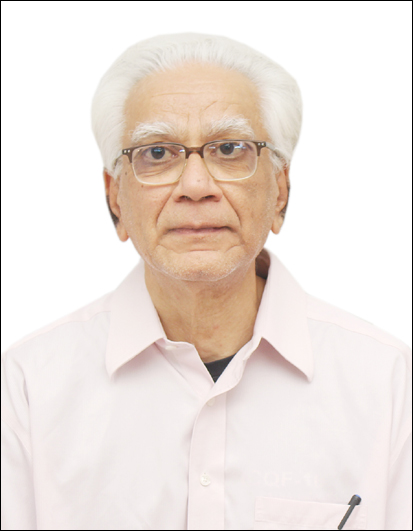
Title: Limitations of Quantum Advantage and Implications
Speaker: Apoorva D. Patel, Emeritus Professor, Centre for High Energy Physics, Indian Institute of Science, Bangalore.
Abstract: Quantum computation is universal, but quantum advantage is not. Applications of quantum technology will be practical only in situations where the advantage offered by them is large enough to offset their technological cost. Genuine quantum features appear in algorithms and devices only when they involve the fundamental Planck constant in some form or the other. Explicit scenarios illustrating this constraint will be described. The implication is that quantum technology will be used only as special purpose subroutines in hybrid classical-quantum settings.
Speaker Bio: Apoorva D. Patel is an Emeritus Professor at the Centre for High Energy Physics at the Indian Institute of Science, Bangalore, and is involved with the IISc Quantum Technology Initiative. He is also a Visiting Professor at the ICTS-TIFR, Bangalore. He obtained his MSc in Physics (1980) from the Indian Institute of Technology Bombay, and his PhD in Physics (1984) from the California Institute of Technology, USA. He has extensively worked on lattice gauge theory investigations of Quantum Chromodynamics. He is also notable for his work on quantum algorithms, and the application of information theory concepts to understand the structure of genetic languages. He was exposed to the subject of quantum computation during his graduate student days at Caltech, and he has been teaching the subject at IISc for more than 25 years.

HiPC 2026 is the 33rd edition of the IEEE International Conference on High Performance Computing. It will be an in-person event in Bengaluru, India, from December 16 to December 19, 2026.
Follow us on:
IEEE Conduct and Safety Statement
IEEE believes that science, technology, and engineering are fundamental human activities, for which openness, international collaboration, and the free flow of talent and ideas are essential. Its meetings, conferences, and other events seek to enable engaging, thought provoking conversations that support IEEE’s core mission of advancing technology for humanity. Accordingly, IEEE is committed to providing a safe, productive, and welcoming environment to all participants, including staff and vendors, at IEEE-related events.
IEEE has no tolerance for discrimination, harassment, or bullying in any form at IEEE-related events. All participants have the right to pursue shared interests without harassment or discrimination in an environment that supports diversity and inclusion.
Participants are expected to adhere to these principles and respect the rights of others. IEEE seeks to provide a secure environment at its events. Participants should report any behavior inconsistent with the principles outlined here, to on site staff, security or venue personnel, or to [email protected].
IEEE Computer Society Open Conference Statement
Expanding participation in computing is central to the goals of the IEEE Computer Society and all of its conferences. The IEEE Computer Society is firmly committed to broad participation in all sponsored activities, including but not limited to, technical communities, steering committees, conference organizations, standards committees, and ad hoc committees that welcome the entire global community. IEEE’s mission to foster technological innovation and excellence to benefit humanity requires the talents and perspectives of people with many disciplinary backgrounds.
All individuals are entitled to participate in any IEEE Computer Society activity free of discrimination and harassment.