Keynote Speakers
33rd IEEE International Conference on High Performance Computing
Keynote Talks
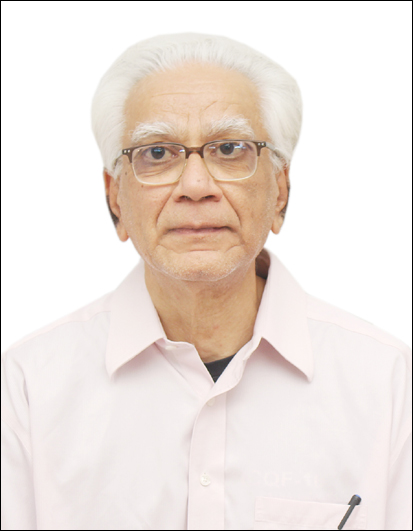
Title: Limitations of Quantum Advantage and Implications
Speaker: Apoorva D. Patel, Emeritus Professor, Centre for High Energy Physics, Indian Institute of Science, Bangalore.
Abstract: Quantum computation is universal, but quantum advantage is not. Applications of quantum technology will be practical only in situations where the advantage offered by them is large enough to offset their technological cost. Genuine quantum features appear in algorithms and devices only when they involve the fundamental Planck constant in some form or the other. Explicit scenarios illustrating this constraint will be described. The implication is that quantum technology will be used only as special purpose subroutines in hybrid classical-quantum settings.
Speaker Bio: Apoorva D. Patel is an Emeritus Professor at the Centre for High Energy Physics at the Indian Institute of Science, Bangalore, and is involved with the IISc Quantum Technology Initiative. He is also a Visiting Professor at the ICTS-TIFR, Bangalore. He obtained his MSc in Physics (1980) from the Indian Institute of Technology Bombay, and his PhD in Physics (1984) from the California Institute of Technology, USA. He has extensively worked on lattice gauge theory investigations of Quantum Chromodynamics. He is also notable for his work on quantum algorithms, and the application of information theory concepts to understand the structure of genetic languages. He was exposed to the subject of quantum computation during his graduate student days at Caltech, and he has been teaching the subject at IISc for more than 25 years.

HiPC 2026 is the 33rd edition of the IEEE International Conference on High Performance Computing. It will be an in-person event in Bengaluru, India, from December 16 to December 19, 2026.
Follow us on:
IEEE Conduct and Safety Statement
IEEE believes that science, technology, and engineering are fundamental human activities, for which openness, international collaboration, and the free flow of talent and ideas are essential. Its meetings, conferences, and other events seek to enable engaging, thought provoking conversations that support IEEE’s core mission of advancing technology for humanity. Accordingly, IEEE is committed to providing a safe, productive, and welcoming environment to all participants, including staff and vendors, at IEEE-related events.
IEEE has no tolerance for discrimination, harassment, or bullying in any form at IEEE-related events. All participants have the right to pursue shared interests without harassment or discrimination in an environment that supports diversity and inclusion.
Participants are expected to adhere to these principles and respect the rights of others. IEEE seeks to provide a secure environment at its events. Participants should report any behavior inconsistent with the principles outlined here, to on site staff, security or venue personnel, or to [email protected].
IEEE Computer Society Open Conference Statement
Expanding participation in computing is central to the goals of the IEEE Computer Society and all of its conferences. The IEEE Computer Society is firmly committed to broad participation in all sponsored activities, including but not limited to, technical communities, steering committees, conference organizations, standards committees, and ad hoc committees that welcome the entire global community. IEEE’s mission to foster technological innovation and excellence to benefit humanity requires the talents and perspectives of people with many disciplinary backgrounds.
All individuals are entitled to participate in any IEEE Computer Society activity free of discrimination and harassment.