IRUS – Quantum
32nd IEEE International Conference on High Performance Computing, Data, & Analytics
Advances in Quantum Computing – Where are we now?
December 20th, 3:20 p.m. – 6:00 p.m.
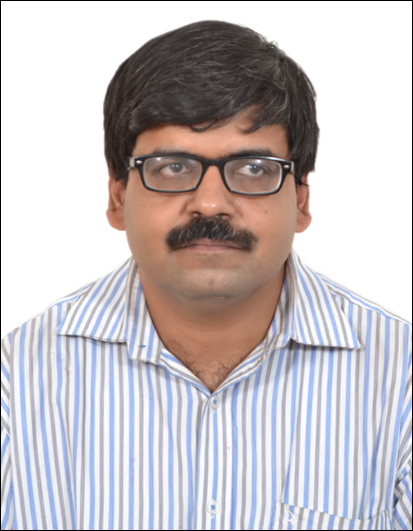
Prof. Anirban Pathak, JIIT, Noida, India
Bio: Prof. Anirban Pathak is a theoretical physicist. He did his Ph.D. from Visva-Bharati, Santiniketan, India. Subsequently, he was a post-doctoral fellow at the Freie University, Berlin. He joined JIIT, Noida in 2002. At present, he is actively involved in teaching and research related to several aspects of quantum optics and quantum information with a focus on quantum cryptography and photonic quantum computing. He is a fellow of The National Academy of Sciences, India (NASI) and Institute of Electronics and Telecommunication Engineering (IETE). He was a visiting scientist at Palacky University, Czech Republic for a long period. He is also one of the editors of Quantum Information Processing, Springer-Nature. He is a recipient of 2017 Shri O. P. Bhasin Award in the field of Electronics and Information Technology. He has designed several schemes for secure multi-party computation and different other cryptographic tasks. He has also worked extensively on different types of quantum algorithms.
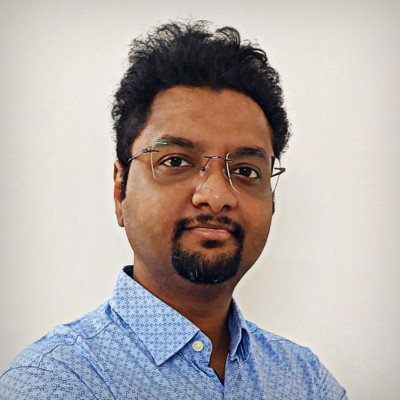
Dr. Arita Sarkar, Fujitsu Research, India
Bio: Dr. Aritra Sarkar is a Senior Researcher at Fujitsu Research of India Private Limited, Bengaluru, focusing on Quantum Software Automation. Previously, he worked as a scientist at ISRO, contributing to the development and programming of 10+ remote-sensing satellites. He is particularly proud of the code he wrote for the Chandrayaan orbiter missions. In 2016 he shifted gears from the vastness of outer space to the tiny realm of quantum by joining the Quantum and Computer Engineering Department at Delft University of Technology. Unlike most in quantum computing, his academic foundation is rooted in full-stack system architecture aspects. During his PhD, he developed first-of-its-kind quantum algorithms for applications in bioinformatics and reinforcement learning. Prior to returning to India and joining Fujitsu, he was part of the Quantum Machine Learning group at QuTech in the Netherlands.
Aritra is driven by the goal of bridging the gap between the engineering physicists who build quantum processors and the complexity theorists who design algorithms for them. His research interests lie in algorithmic information theory, a branch of theoretical computer science, that underpins universal reinforcement learning, explainable AI, and aspects of artificial general intelligence. He works on developing quantum counterparts of these ideas and applying them to automated scientific discovery, particularly in quantum compilation and system architecture.
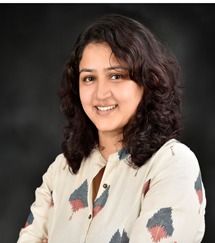
Dr. Anindita Banerjeer, CDAC, India
Bio: Anindita is a Senior Scientist at CDAC Pune who leads various quantum-related initiatives of CDAC. At present, she is working on fiber QKD, QRNG and aerial quantum communication platforms. In the area of quantum computing, she is working on different quantum computing applications on accelerated platforms. Earlier, she worked as Quantum Research Head and VP at QuNu Labs Pvt Ltd, focusing on quantum-safe solutions for cybersecurity. At QuNu Labs, she developed India’s first fiber-based QKD system from TRL 2 to TRL6. Specifically, she realized the distributed phase reference protocols for QKD in fiber-based systems. She was also involved in theoretical security proofs, simulation and key rate analysis. Further, she developed India’s first QRNG based on Time-of-Arrival and mixed QRNG. Further, during PhD, Anindita had developed novel quantum communication protocols and worked on synthesis and optimization of quantum circuits. As a post-doctoral fellow, she established a quantum optics lab in Bose Institute, Kolkata and conducted some foundational experiments. The products developed by her are tested by various government and industry organizations. She has already received 4 US and 1 Indian patents as recognition of her success in converting academic research into useful products. She has also written several well-cited research papers.
She leads a team of young researchers in Pune. She has trained many scientists and student interns over the year. She has also co-authored a book published by SPIE (Optical quantum information and quantum communication, A. Pathak and A. Banerjee, SPIE Spotlight Series, SPIE Press (2016) ISBN: 9781510602212) which has helped many researchers and students to learn the basics of optical quantum information. She is part of the AICTE committees that developed courses for minor degree and MTech degree in Quantum Technologies. She has also developed a course materials called CAKES for CDAC employees interested to learn quantum technologies. She has also delivered a Ted talk and several invited talks to promote and popularize the area of quantum information in India. In addition, the following may be noted.
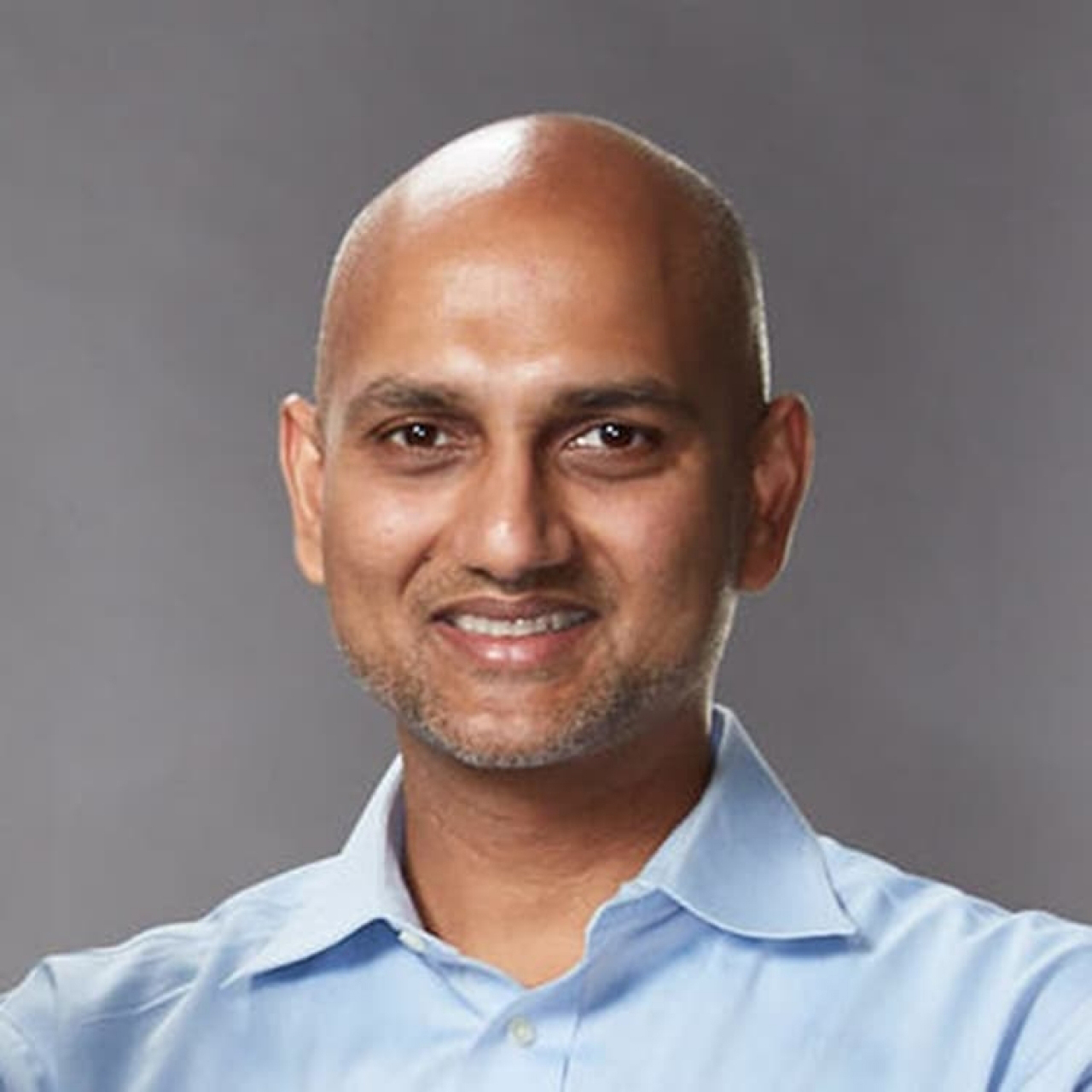
Aravind Ratnam, Q-Ctrl
Bio: Aravind is a seasoned deep tech leader across aerospace & defense, semiconductors, software, consulting, autonomous driving and quantum technology. He is currently the Chief Strategy Officer at Q-CTRL. In his role, Aravind oversees strategy, revenue, product, and partnerships, working across Q-CTRL and overseeing some of the industry’s fastest growth. Aravind has advised several deep tech companies, is a limited partner and advisor to venture funds, and has worked on some of the world’s most cutting edge technology at NASA (where he worked on a space instrument for Shuttle Endeavor), ASML (where he worked on the world’s first EUV light source) Intel and leading intelligent sensor companies. Aravind holds two Master’s degrees- in Space Science from Florida Tech, and in Engineering & Management from MIT.
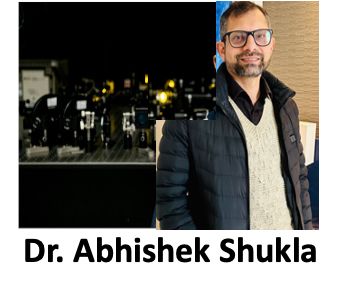
Dr. Abhishek Shukla, Hasselt University, Belgium
Title: Design and Development of Key QC and QML Application: QC Platforms, Use Cases, and Robust Implementation
Bio: Dr Abhishek Shukla is a Researcher-expert in the Q-Lab IMO-IMOMEC (a joint research institute of IMEC and Hasselt University, Belgium), where he has played a crucial role in enabling the research and development of quantum technology. He did his PhD in quantum computing and its NMR implementations from IISER-Pune under Prof T. S. Mahesh and extended his knowledge dimensions through multiple postdocs in USTC-China, Hebrew University-Israel, IMEC-Belgium. His expertise covers the quantum & quantum machine learning algorithms, efficient characterization and optimal control of quantum dynamics, development of solid-state quantum sensors & quantum repeaters, nanoscale NMR & post-quantum communication, and gravitational wave detection. He is contributing to several quantum technology projects that play crucial roles both in the scientific & technological development and deployment towards field applications, for example, represented Belgium as co-PI in LUMI-Q, SPINUS project for quantum computation platform, in C-QUENS for developing capacitance for entanglement enhanced quantum sensing, Be-QCI, Bel-NET, and Q-NMR, Qu-Micro, etc. Dr shukla has also played key role in qualifying technical round for DLR funding and advising other startups before founding QuISTechAI.
Dr Shukla is also the founder and CTO of QuISTechAI, an India-based startup, working in the domain of quantum technology and AI. Specifically, QuISTechAI is working on developing hybrid quantum-classical & hybrid QML approaches for applications in medical science & pharmaceuticals, fluid dynamics, finance, and optimisation, quantum-safe cryptography, and development of solid-state non-invasive quantum sensors and applications exploiting developed capabilities.
Dr Abhishek Shukla is also the founder and CTO of QuISTechAI, an India-based startup, working in the domain of quantum technology and AI. Specifically, QuISTechAI is working on developing hybrid quantum-classical & hybrid QML approaches for applications in medical science & pharmaceuticals, fluid dynamics, finance, and optimisation, quantum-safe cryptography, and development of solid-state non-invasive quantum sensors and applications exploiting developed capabilities.
Dr Shukla is also working as researcher-expert in the Q-Lab IMO-IMOMEC (a joint research institute of IMEC and Hasselt University, Belgium), where he has played a crucial role in enabling the research and development of quantum technology. He did his PhD in quantum computing and its NMR implementations from IISER-Pune under Prof T. S. Mahesh and extended his knowledge dimensions through multiple postdocs in USTC-China, Hebrew University-Israel, IMEC-Belgium. His expertise covers the quantum & quantum machine learning algorithms, efficient characterization and optimal control of quantum dynamics, development of solid-state quantum sensors & quantum repeaters, nanoscale NMR & post-quantum communication, and gravitational wave detection. He is contributing to several quantum technology projects that play crucial roles both in the scientific & technological development and deployment towards field applications, for example, represented Belgium as co-PI in LUMI-Q, SPINUS project for quantum computation platform, in C-QUENS for developing capacitance for entanglement enhanced quantum sensing, Be-QCI, Bel-NET, and Q-NMR, Qu-Micro, etc. Dr. Shukla has also played the key role in qualifying technical round for DLR funding and advising other startups before founding QuISTechAI.
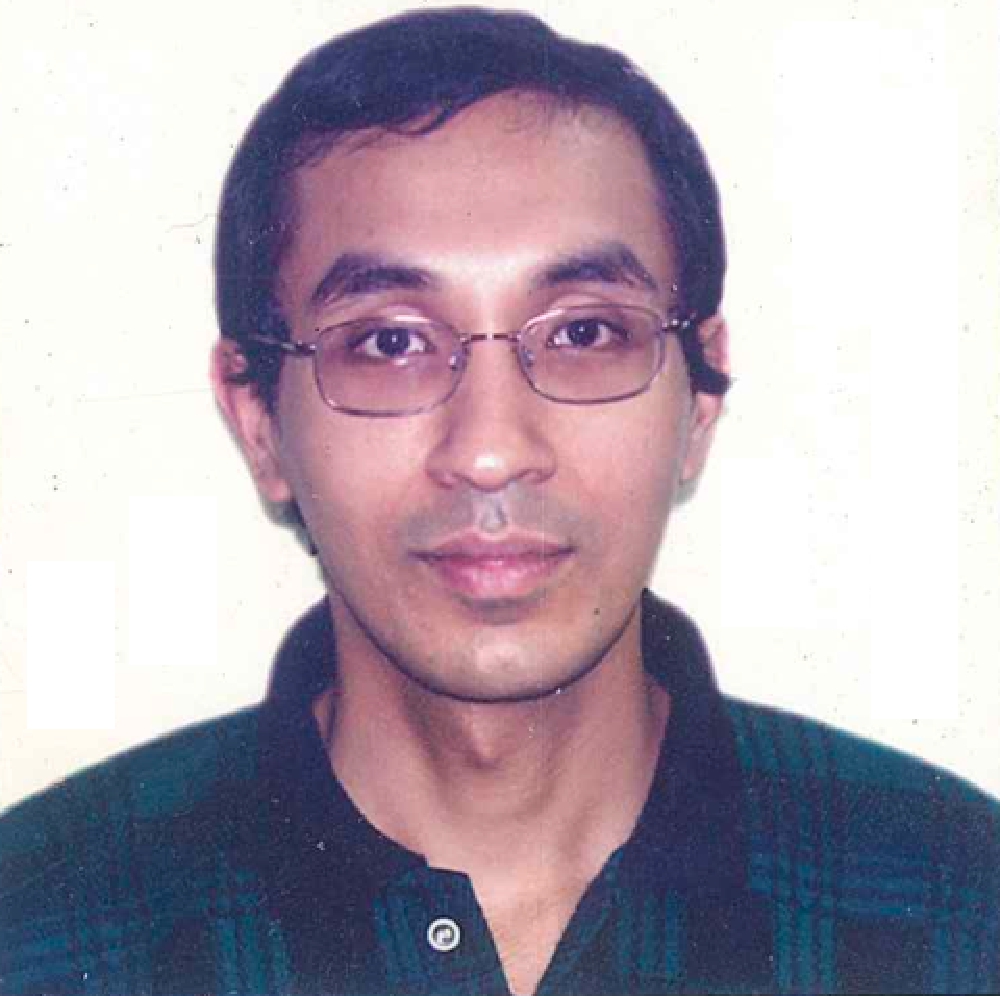
Prof. Pranab Sen, Professor in the School of Technology and Computer Science, Tata Institute of Fundamental Research (TIFR), Mumbai
Bio: Pranab Sen is a professor in the School of Technology and Computer Science, Tata Institute of Fundamental Research (TIFR), Mumbai. He got into quantum computing research serendipitously while finishing his PhD at TIFR more than two decades ago. After postdoctoral experience in quantum computing and complexity theory at universities in France and Canada, and industrial research experience in the USA, he joined TIFR as a faculty member in 2006. He has held visiting professor positions at McGill University, Canada and National University of Singapore since, diversifying into quantum information theory and quantum cryptography.
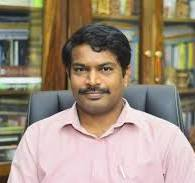
Dr. C. M. Chandrashekar, Associate Professor, IISc, Bengaluru
Title : Quantum Computing using Photons
Abstract : A wide range of physical platforms for realizing qubits and building scalable quantum computers has been actively explored. Among these, photonic quantum computing has emerged as a particularly promising and versatile approach. In this talk, I will provide an overview of quantum computing with photons, highlighting how qubits can be encoded in different degrees of freedom of light. I will then focus on recent experimental advances at the Indian Institute of Science (IISc), where we have demonstrated the generation of a six-qubit entangled state, illustrating the potential of photonic architectures for scalable quantuminformation processing.

HiPC 2025 is the 32st edition of the IEEE International Conference on High Performance Computing, Data, and Analytics. It will be an in-person event in Hyderabad, India, from December 17 to December 20, 2025.
IEEE Conduct and Safety Statement
IEEE believes that science, technology, and engineering are fundamental human activities, for which openness, international collaboration, and the free flow of talent and ideas are essential. Its meetings, conferences, and other events seek to enable engaging, thought provoking conversations that support IEEE’s core mission of advancing technology for humanity. Accordingly, IEEE is committed to providing a safe, productive, and welcoming environment to all participants, including staff and vendors, at IEEE-related events
IEEE has no tolerance for discrimination, harassment, or bullying in any form at IEEE-related events. All participants have the right to pursue shared interests without harassment or discrimination in an environment that supports diversity and inclusion.
Participants are expected to adhere to these principles and respect the rights of others. IEEE seeks to provide a secure environment at its events. Participants should report any behavior inconsistent with the principles outlined here, to on site staff, security or venue personnel, or to [email protected].
IEEE Computer Society Open Conference Statement
Expanding participation in computing is central to the goals of the IEEE Computer Society and all of its conferences. The IEEE Computer Society is firmly committed to broad participation in all sponsored activities, including but not limited to, technical communities, steering committees, conference organizations, standards committees, and ad hoc committees that welcome the entire global community.
IEEE’s mission to foster technological innovation and excellence to benefit humanity requires the talents and perspectives of people with many disciplinary backgrounds.
All individuals are entitled to participate in any IEEE Computer Society activity free of discrimination and harassment.
Follow us on: