Invited Talks
32nd IEEE International Conference on High Performance Computing, Data, & Analytics
Invited Talks – December 19th, 12:45 – 3:15 p.m., Ballroom
Session Chair: Vivek Yadav
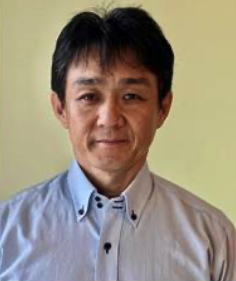
- Speaker: Kouichi Hirai, Fujitsu Limited – Head of Software Development Division, Advanced Technology Development Unit
- Title: Building Software Ecosystem for Deep learning on Next Gen Arm Processor FUJITSU – MONAKA
- Abstract: FUJITSU-MONAKA promises to improve AI and HPC performance and energy efficiency across data centres and the edge computing. Looking beyond FUJITSU MONAKA, Fujitsu is committed to a long term roadmap that accelerates advancements in HPC and AI, contributing to a sustainable future.
- Speaker Bio: With a professional experience of over 27 years, Kouichi Hirai currently works as Head of Software Development division for Fujitsu Processors & Supercomputers. Played a pivotal role in delivering high performance computing systems and Supercomputers like Fugaku. Kouichi Hirai has diverse experience & expertise in SW development, Data Center Computing & AI technology. Kouichi Hirai represents Fujitsu at multiple open forums such as Linaro for popularizing & enhancing the ARM ecosystem for sustainable development.
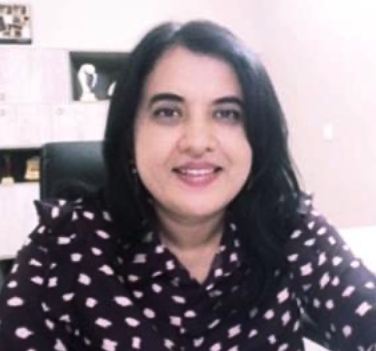
- Speaker: Priyanka Sharma, PhD, Fujitsu Research of India – Director, Software Engineering & Head MONAKA Software R&D Unit
- Title: Scientific Computing and Confidential Computing
- Abstract: AI surrogate technology refers to the use of AI models as fast, learned approximations of complex, computationally expensive scientific simulations. Train on data generated from simulations, then use trained surrogate models to quickly predict outcomes. qAI Surrogate evaluation involves assessing accuracy (how closely predictions match ground-truth HPC simulations) and execution time performance (speedup, scalability, and efficiency gains over traditional HPC simulations).
Confidential computing: To protect end-user data in memory by encrypting each VM with a different key generated by the processor. Expected to be an essential technology in cloud, edge and HPC environments where sensitive data is processed - Speaker Bio: Priyanka joined Fujitsu in April 2023 as the Director of Software Engineering and heads the MONAKA SW R&D Business Unit at Fujitsu Research of India. She represents Fujitsu as the Founding Steering Committee Member of Unified Accelerator (UXL) Foundation and works with global tech leaders for democratizing the use of AI.
With a work experience of over 25 years in Technology Leadership that spans Industry, Academia, and Research Centers, Priyanka Sharma, specializes in leading AI-enabled system design, development, and deployment using core technologies involving HPC, AI and systems engineering. She has spearheaded many global R&D collaborations and AI advisory roles across India, the UK, Canada, the USA, and the UAE, spanning interdisciplinary technology domains including industrial automation, computational drug discovery, and supply chain logistics.
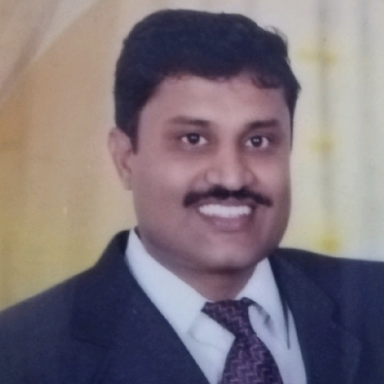
- Speaker: Shyam Kumar Doddavula
- Title: Scaling IT and Business Service delivery using AI Workforce
- Abstract: With recent advances in Agentic AI, traditional IT and Business service delivery models are being disrupted. In this talk, we will discuss the impact of this transformation on the global IT services industry, focusing on how AI Workforce—autonomous, goal-driven agents powered by high performance computing —can scale service delivery, enhance agility, and optimize cost. We will explore architectural patterns, research challenges in trust and governance, and future directions for delivering services as software.
- Speaker Bio: Shyam Doddavula is a technology executive and thought leader currently serving as the Vice President and head of Infosys Center for Emerging Technology Solutions, a dedicated Applied R&D and incubation unit at Infosys. He has over 24 years of experience and his primary areas of focus include innovation, consulting, intrapreneurship, and incubation of technology-led solutions for business transformation. He is a technologist with more than 10 granted patents, several publications, and deep expertise in AI, cybersecurity, and blockchain. He was recently recognized with a “50 Under 50 Award” for his industry impact by HR Association of India and as top 50 cyber security consultants by The Consulting report.
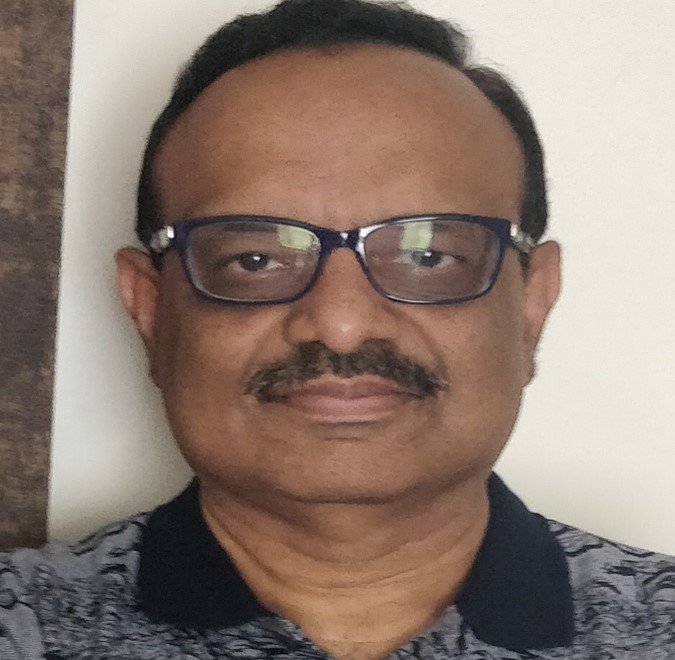
- Speaker: Prakash Raghavendra
- Title: Pushing the Frontiers of the Heterogeneous Computing
- Abstract: With the growing needs of AI infrastructure’s power and compute needs, AMD has innovated several technologies. In this talk, we will focus on these technologies and innovations that AMD has brought to the industry to optimize power-performance for AI computing.
- Speaker Bio: Prakash Raghavendra has completed his PhD from IISc in 1998. Since then, he has been working in the areas of kernels, compilers. As a Senior Fellow in AMD, his focus is optimizing Deep Learning stack for AMD servers. He also leads an AMD research team in India.
- Speaker: Pradeeep Ramachandran
- Title: AI and HPC in Semiconductor Manufacturing
- Abstract: Process control during semiconductor manufacturing is critical to ensure that the manufacturing process achieves and maintains high yield. Today’s process control systems leverage algorithms based on computer vision, image processing, and physics to detect defects and measure critical dimensions of transistors which are now in tens of Angstroms! This talk will give you a bird’s eye-view of the complexities involved in the fascinating world of semiconductor manufacturing, why process control is essential for this complex flow, and how KLA’s process control tools leverage AI and HPC to solve problems at atomic scales.
- Speaker Bio: Pradeep Ramachandran is the Director and Head of Research at KLA’s Artificial Intelligence and Advanced Computing Lab (ACL) based out of IIT Madras Research Park. He holds a Btech from IIT Madras, and an MS and PhD from the University of Illinois at Urbana Champaign. Pradeep’s research interests are in developing optimal system level solutions by co-optimising across algorithms, hardware, and software; his work under this theme spans the fields of fault tolerance, chip design, video compression software, and HPC systems design. Pradeep enjoys cooking, traveling, running outdoors, and rolling on the ground with his 6 year old son!
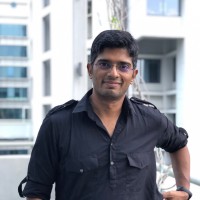
- Speaker: Professor Maninder Singh
- Title: The New Compute Paradigm: From High-Performance Computing to High-Performance Intelligence
- Abstract:
The past decade has been defined by unprecedented advances in high-performance computing, enabling large-scale simulation, numerical modeling, and data-intensive scientific workloads. Today, however, we stand at the threshold of a new computational epoch—one in which intelligence, not raw FLOPs, becomes the central driver of performance. This talk explores the emerging paradigm of High-Performance Intelligence, where AI-native architectures, surrogate models, and foundation models are reshaping the capabilities, workflows, and purpose of traditional HPC systems.Talk focuses on a case study illustrating this transformation: cybersecurity workflows that once relied on HPC-driven batch analytics now require AI-driven, streaming, intent-aware intelligence. Through this lens, talk highlights how polymorphic attacks and zero-day threats overwhelm classical HPC-era security analytics but are effectively handled by modern AI pipelines combining LLM reasoning, deep embeddings, autoencoders, and GNN-based lateral movement detection—delivering sub-second detection and autonomous containment at scale.
- Speaker Bio:
Maninder Singh received his bachelor’s degree from Pune University in 1994, and holds a master’s degree, with honours in Software Engineering from Thapar Institute of Engineering & Technology, as well as a Doctoral Degree specialization in Network Security from Thapar University.
He joined Thapar Institute of Engineering & Technology, in January 1996 as Lecturer. His strong hold is practical know-how of computer networks and security. He is on the Roll-of-honour @ EC-Council USA, being certified as Ethical Hacker (C|EH), Security Analyst (ECSA) and Licensed Penetration Tester (LPT).Dr. Singh has successfully completed many consultancy projects (network auditing and penetration testing) for renowned national bank(s) and corporations. Dr. Singh has 70+ research publications in reputed SCI high impact factor journals. His research interests include Network Security, Secure coding and is a strong torchbearer for the Open-Source Community.
Dr. Singh guided fifteen Ph.D. and 51 master’s theses. He is currently supervising four Ph.D. candidates in Network Security and secure coding. Having practical orientation and research inclination he architected Thapar University’s network presence, which is successfully implemented in a heterogeneous environment of wired as well wireless connectivity.
Dr. Singh, being a captive orator, has a long list of expert lectures delivered at renowned Institutes and Corporate. His vision for developing an Open Source Based network security toolkit was published by a leading national newspaper. Linux for You (LFY) magazine from India declared him a ‘Tux Hero’.
Dr. Singh is Senior Member of IEEE, Senior Member of ACM, and Life Member of Computer Society of India. He has been volunteering his services for the Network Security community as a reviewer and project judge for IEEE design contests. Recently Dr. Singh was aired on “Centre Stage” @ Headlines Today, national channel.
Apart from teaching responsibilities Dr. Singh held many strategic positions in TU campus, currently he is Full Professor in Computer Science and Engineering Department and Chief Technology Officer (CTO) responsible for university wide Network, ERP, IT Strategy: planning, deployment and management.
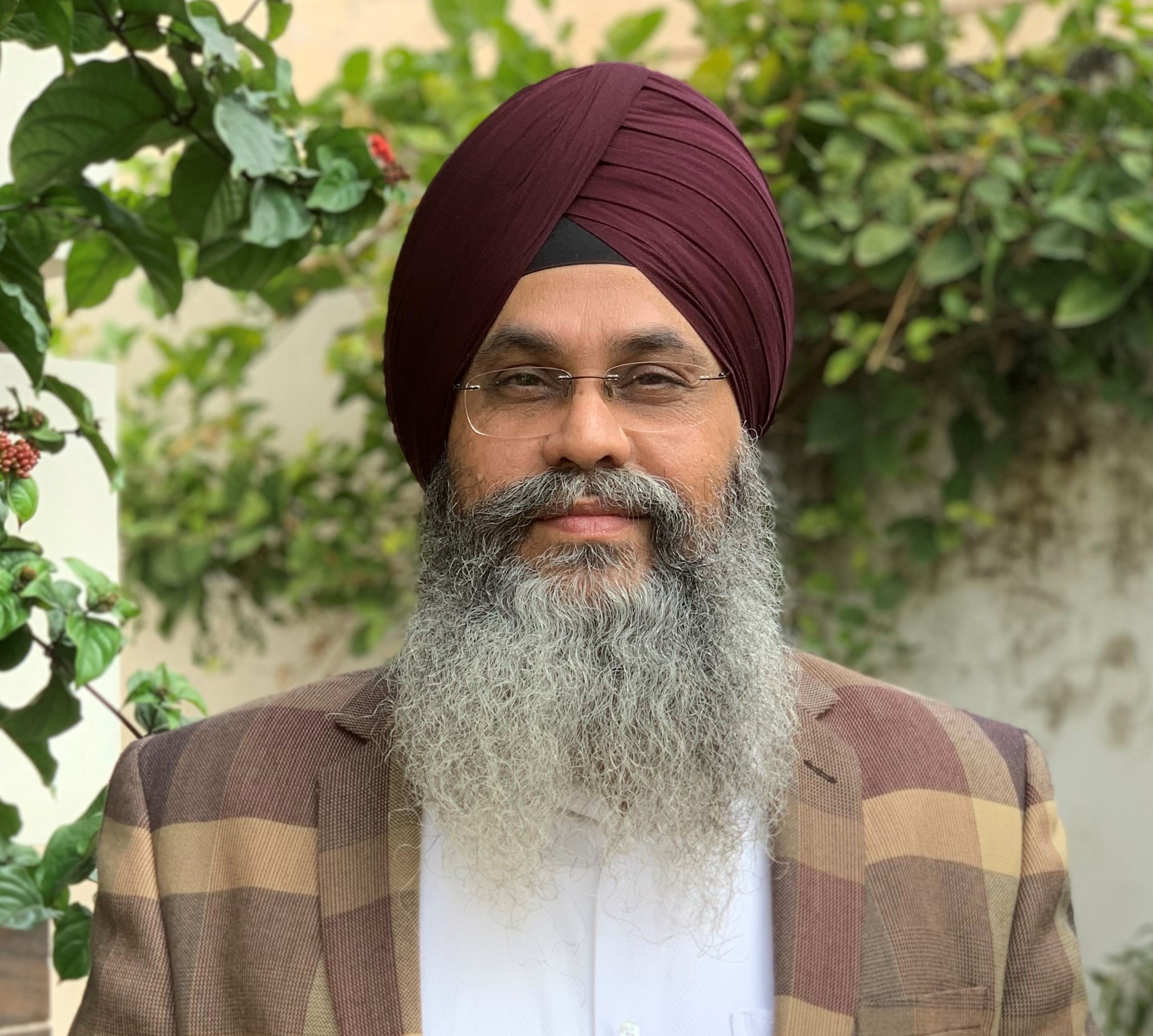
- Speaker: Arvind Ratnam
- Title: Q-CTRL’s critical infrastructure software unlocks useful performance in Quantum Computers
- Abstract: Infrastructure software is key to unlocking useful performance from any true quantum technology. Q-CTRL addresses the problem of error and delivers higher Quantum computing performance for a broad range of users, from R&D teams to industry end users. Promising results have been demonstrated across a range of problems from logistics and scheduling to quantum machine learning, quantum chemistry and automotive design with customers like Airbus, UK Network Rail, Mitsubishi and Mazda. Q-CTRL was the first ISV on IBM Quantum and the first to power a hybrid quantum supercomputer at RIKEN in Japan. Key trends in the quantum computing market include integrating quantum computing into data centers and the rise of smaller, cheaper QPUs that can still perform useful computations when paired with infrastructure software that is prevalidated and pre-integrated with trusted subsystems. In this talk, I present an overview of Q-CTRL’s role in pushing the state of the art in quantum computing and what lies ahead.
- Speaker Bio: Aravind is a seasoned deep tech leader across aerospace & defense, semiconductors, software, consulting, autonomous driving and quantum technology. He is currently the Chief Strategy Officer at Q-CTRL. In his role, Aravind oversees strategy, revenue, product, and partnerships, working across Q-CTRL and overseeing some of the industry’s fastest growth. Aravind has advised several deep tech companies, is a limited partner and advisor to venture funds, and has worked on some of the world’s most cutting edge technology at NASA (where he worked on a space instrument for Shuttle Endeavor), ASML (where he worked on the world’s first EUV light source) Intel and leading intelligent sensor companies. Aravind holds two Master’s degrees- in Space Science from Florida Tech, and in Engineering & Management from MIT.

HiPC 2026 is the 33rd edition of the IEEE International Conference on High Performance Computing, Data, and Analytics. It will be an in-person event in Bengaluru, India, from December 16 to December 19, 2026.
Follow us on:
IEEE Conduct and Safety Statement
IEEE believes that science, technology, and engineering are fundamental human activities, for which openness, international collaboration, and the free flow of talent and ideas are essential. Its meetings, conferences, and other events seek to enable engaging, thought provoking conversations that support IEEE’s core mission of advancing technology for humanity. Accordingly, IEEE is committed to providing a safe, productive, and welcoming environment to all participants, including staff and vendors, at IEEE-related events.
IEEE has no tolerance for discrimination, harassment, or bullying in any form at IEEE-related events. All participants have the right to pursue shared interests without harassment or discrimination in an environment that supports diversity and inclusion.
Participants are expected to adhere to these principles and respect the rights of others. IEEE seeks to provide a secure environment at its events. Participants should report any behavior inconsistent with the principles outlined here, to on site staff, security or venue personnel, or to [email protected].
IEEE Computer Society Open Conference Statement
Expanding participation in computing is central to the goals of the IEEE Computer Society and all of its conferences. The IEEE Computer Society is firmly committed to broad participation in all sponsored activities, including but not limited to, technical communities, steering committees, conference organizations, standards committees, and ad hoc committees that welcome the entire global community. IEEE’s mission to foster technological innovation and excellence to benefit humanity requires the talents and perspectives of people with many disciplinary backgrounds.
All individuals are entitled to participate in any IEEE Computer Society activity free of discrimination and harassment.